
Winter Garden Plants
Winter garden planting focuses on creating interest, structure, and life during the coldest months of the year. While many plants are dormant, a well-planned winter garden can still offer colour, fragrance, texture, and support for wildlife. The key is choosing plants that shine when others fade.
Winter interest comes from more than flowers. Evergreens provide shape and stability, while berries, seed heads, and grasses add colour and movement. Some shrubs and trees bloom in winter, filling the garden with unexpected scent and early nectar for pollinators. Coloured bark and stems become more visible once leaves fall, adding depth and contrast to the landscape.
Planting with winter in mind also improves the garden year-round. Many winter-feature plants are hardy, low-maintenance, and long-lived. By combining trees, shrubs, and ground plants, gardeners can create a space that remains attractive, wildlife-friendly, and rewarding even in the quietest season.
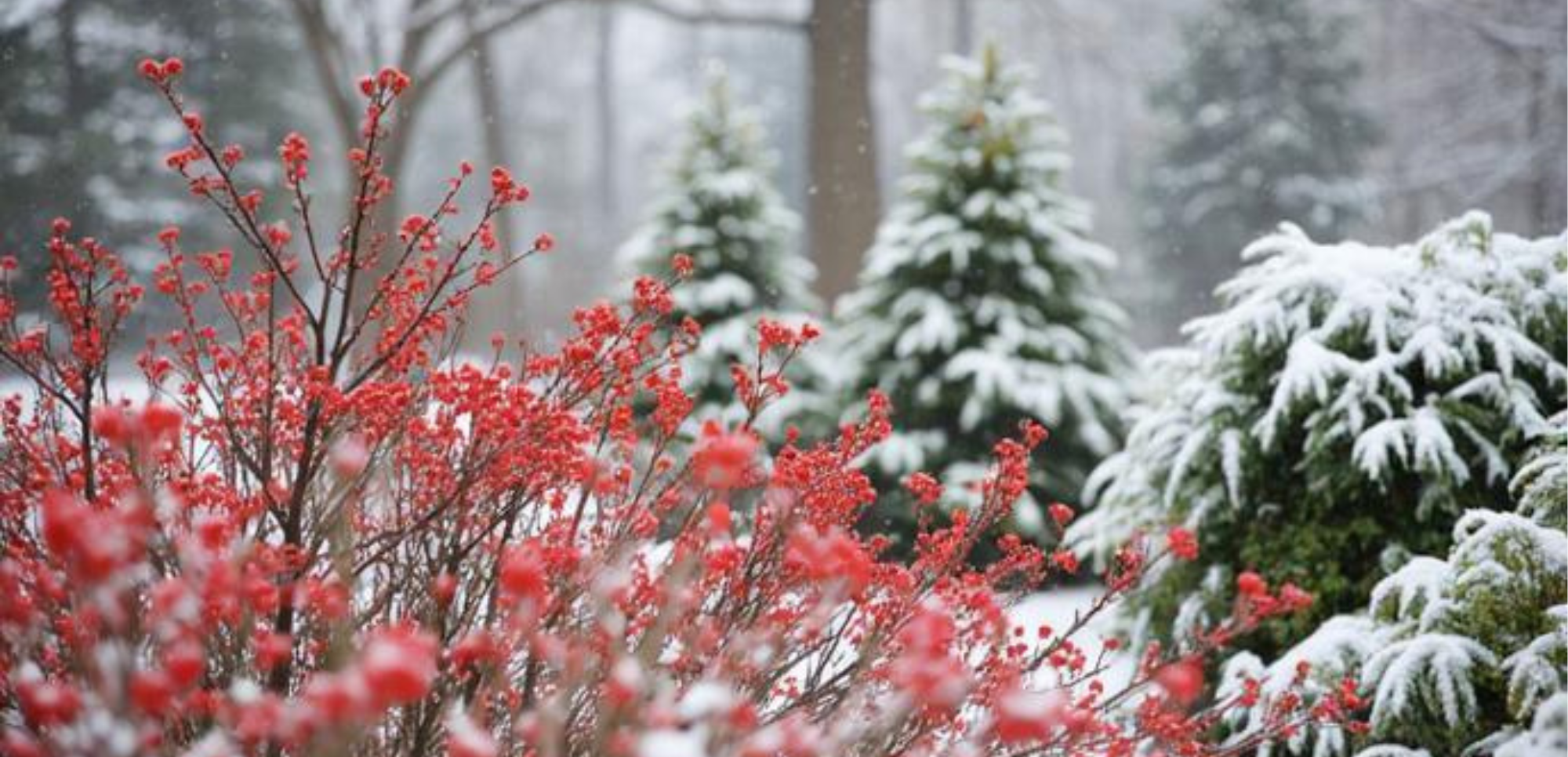
A winter garden doesn’t have to be dull or lifeless. With the right plants, it can offer fragrance, colour, texture, and food for wildlife during the coldest months. Winter-scented plants add surprise and enjoyment, while winter colour comes from flowers, berries, bark, and evergreen foliage.
Winter-scented plants 🌸
These plants release fragrance in winter when few others do—often strongest on mild days.
Shrubs
- Winter honeysuckle (Lonicera fragrantissima)
Creamy white flowers; strong sweet scent (late winter) - Sweet box (Sarcococca)
Small white flowers; powerful fragrance; evergreen foliage - Daphne (Daphne odora)
Pink or white flowers; very fragrant; needs sheltered spot - Viburnum x bodnantense
Pink clusters on bare stems; flowers mid- to late winter - Witch hazel (Hamamelis)
Spidery yellow, orange, or red flowers; light fragrance
Trees & climbers
- Wintersweet (Chimonanthus praecox)
Strong lemony scent; yellow flowers on bare branches - Winter jasmine (Jasminum nudiflorum)
Light fragrance; bright yellow flowers
Winter garden colour 🎨
Colour in winter comes from berries, bark, stems, flowers, and foliage, not just blooms.
Plants with winter flowers
- Hellebores (Christmas rose, Lenten rose) – white, pink, green, purple
- Snowdrops – early, delicate white flowers
- Winter pansies & violas – long-lasting colour
- Cyclamen (hardy varieties) – pinks and reds
Plants with colourful berries
- Holly – red, yellow, or orange berries (female plants)
- Winterberry (deciduous holly) – bright red berries
- Cotoneaster – red or orange berries
- Skimmia – red berries and evergreen leaves
(Berries also provide vital food for birds.)
Plants with colourful bark or stems
- Dogwood (Cornus) – red, orange, or yellow stems
- Willow (Salix) – bright stems in winter light
- Silver birch – white, peeling bark
- Paperbark maple – cinnamon-coloured bark
Evergreens for structure and colour
- Boxwood, yew, holly
- Evergreen grasses and ferns
- Heathers (winter-flowering)
Designing a winter garden
- Plant near paths and doors to enjoy fragrance
- Mix heights: trees, shrubs, ground plants
- Use repetition of colour (red stems, berries)
- Leave seed heads for texture and wildlife
- Choose hardy, low-maintenance plants
Wildlife and winter interest 🐦
Winter plants support birds and pollinators by providing:
- Nectar from early flowers
- Berries for food
- Shelter from wind and cold