
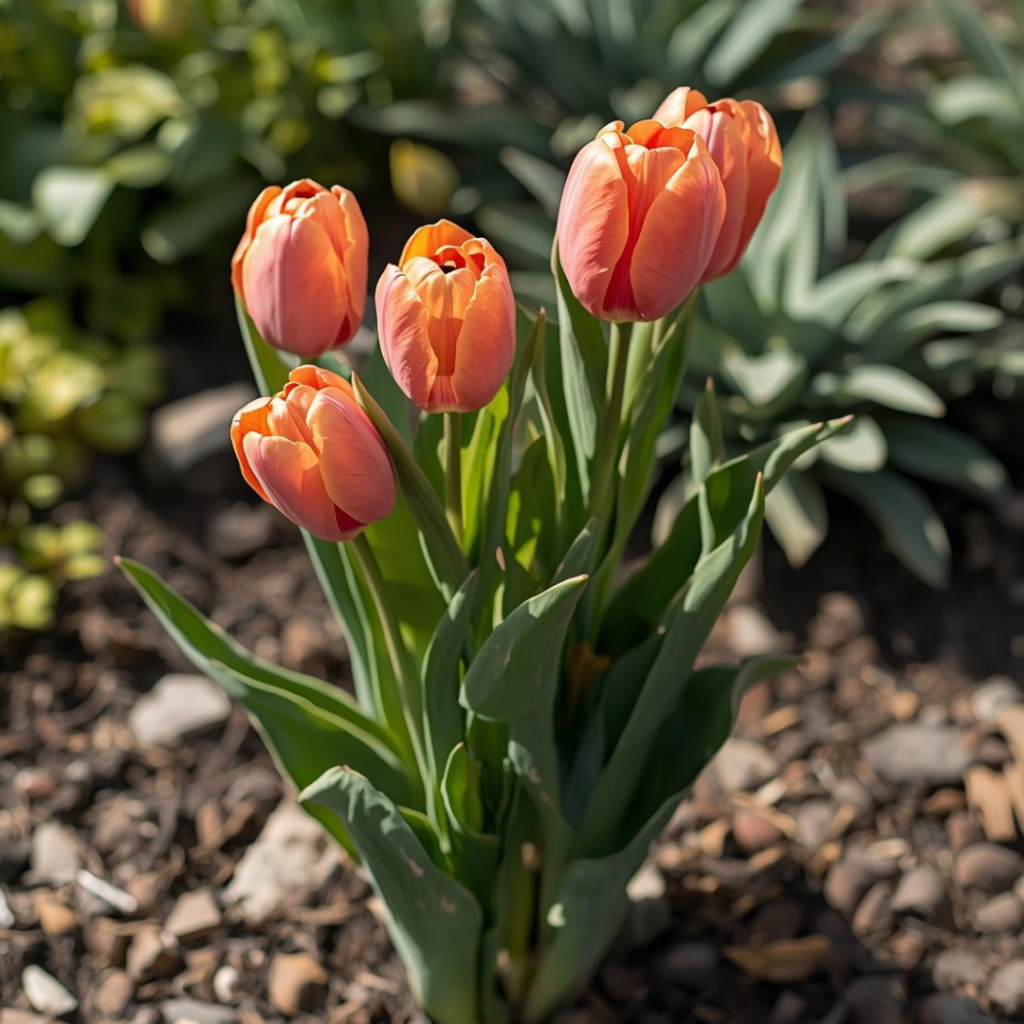
Planting bulbs is like burying little “treasure chests” of energy that wait for the perfect moment to explode into color. Whether you’re planting for spring (Tulips, Daffodils) or summer (Lilies, Dahlias), the process is remarkably satisfying.
1. Timing is Everything
- Spring-Blooming Bulbs: (Tulips, Daffodils, Hyacinths, Crocus) These must be planted in the Autumn (before the ground freezes) because they require a period of cold dormancy to trigger flowering.
- Summer-Blooming Bulbs: (Lilies, Gladioli, Dahlias, Cannas) These are planted in the Spring once the danger of frost has passed and the soil has warmed up.
2. The Golden Rule of Depth
A good rule of thumb is to plant a bulb 2 to 3 times as deep as the bulb is tall.
- Big Bulbs (Daffodils, Tulips): Usually about 15-20cm deep.
- Small Bulbs (Crocus, Snowdrops): Usually about 5-10cm deep.
Note: Always plant with the “pointy side” facing up and the hairy root side facing down. If you can’t tell, plant it on its side—the plant will usually find its way up!
3. Step-by-Step Planting
- Prepare the Soil: Bulbs hate “wet feet” (which causes rot). Ensure the soil is well-draining. Mix in some compost or bone meal if your soil is heavy clay.
- Dig the Hole: You can dig individual holes with a trowel or a bulb planter, or dig a larger trench to plant a group of bulbs for a “bouquet” effect.
- Space Them Out: Generally, space larger bulbs 8-12cm apart and smaller bulbs 3-5cm apart.
- Backfill and Water: Cover with soil, press down gently to remove air pockets, and water thoroughly to settle the soil around the bulb.
4. Creative Planting Techniques
| Technique | Description |
| The “Bulb Lasagna” | Layering bulbs in a pot. Plant the latest-bloomers (like Tulips) at the bottom, cover with soil, add mid-spring bulbs (Daffodils) in the middle, and early-bloomers (Crocus) at the top. |
| Naturalizing | Throwing handfuls of bulbs (like Bluebells or Crocus) onto a lawn and planting them exactly where they land for a wild, meadow look. |
| Drifts | Planting in long, flowing “ribbons” or kidney-shaped clusters rather than straight lines for a more organic feel. |
5. Post-Bloom Care
Once the flowers fade, do not cut the green leaves off immediately. The leaves are busy photosynthesizing to send energy back into the bulb for next year’s flower. Wait until the foliage has turned yellow and withered before removing it.